

How does the international logistics situation affect me?
I imagine that at this point in the year, everyone has heard something about the logistics crisis that we are experiencing, although perhaps what we do not fully know are the causes of this crisis. I am sure that, if we conduct a survey on the causes before analysing them, many of you will vote that the cause is COVID, others will vote that the cause is that the containers are not in the right place, others that China is to blame.
Who is right? Whose responsibility is it for the strain the whole supply chain is under? If there were a single culprit, the solution would be relatively easy to tackle or minimise. The problem is more complex and has multiple factors. Each of them separately would not put so much stress on the supply chain, but all of them together create a perfect storm that has brought us to the point we are in. I will try to shed some light on this issue.
What is the process when the logistics chain works well?
Let's take a look at what logistics does to know what needs to work well. The fundamental mission of business logistics is to get the products (goods and services) to the right place, at the right time and under the right conditions, contributing as much as possible to the profitability of the company.1
To achieve this, it is responsible for processing orders, handling materials (both raw materials and finished products), packaging, transporting the goods, storage, stock control and providing the best possible service to the customer. All this at the lowest possible cost. Costs vary from product to product and from country to country. To get an idea, it is estimated that the average impact of logistics processes in Spain is 10.7% of the final cost of the product.2
To do all this work well, the logistics department must have projections of sales in the coming months, as well as know the production and transport times, in order to know how many materials are needed and when, and organise their transport and storage.
As we know, we are in a highly globalised world, where raw materials are obtained in one area of the planet, manufactured in different places and the finished product can be stored and distributed all over the world from a different location. Until last year, all this machinery was perfectly oiled and running like clockwork, so that the transport of materials arrived everywhere in the right way.
To give you an idea of how it works, the container ship MOL Triumph has a transport capacity of 20,170 TEU (one TEU is equivalent to a 20-foot container), its route starts in Dalian, continues in Asia via Qingdao, Shanghai, Ningbo, Hong Kong, Yantian and Singapore. It will then pass through the Suez Canal and continue on to Tangier, Southampton, Hamburg, Rotterdam and Le Havre. It will then call at Tangier and Jebel Ali on the way back to Asia.3
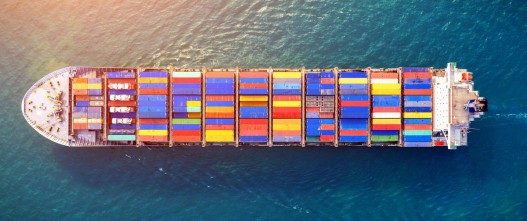
It is not only the number of containers carried by each of these ships that is important, but also the speed at which the ports are working.4 The average time to unload a container depends on the region. According to IHS Markit data, it is less than half as long in Asia as in the US. This may be due to several factors, from the fact that Asia exports more than it imports, to the fact that most ports are more modern. While in the US the average time is about 76 seconds, in Asia it is 27 seconds per container. In Northern Europe this time averages 46 seconds.
In the route example above, ships leave Asian ports loaded with some products and return to Asia with others. Therefore, to keep the world's logistics and production machine running smoothly, ships must be properly loaded at all points along their routes, and containers must be unloaded at ports and moved to their final destination as quickly as possible. I give the example of a sea route because 90% of consumer goods are transported by sea and therefore well-functioning motorways of the sea directly affect world trade.
Well, this large and efficient machinery is nowadays broken.5 Why? Let's see.
The pandemic and empty containers
The year 2020 was marked by restrictions on mobility and the confinement of thousands of people. This has clearly and decisively affected world trade in various ways.
On the one hand, the confinement of people, the closure of production sites and port logistics terminals affected different parts of the world in different ways. Confinements and closures started in China in a very blunt manner, but soon the de-escalation of restrictions began and production sites were quickly reactivated. Elsewhere, such as in Europe, restrictions and closures of production sites lasted longer. This led to an imbalance in the shipping lanes, as ships left China full, but on their return route they were not as heavily laden as before.
As a consequence, there was a build-up of empty containers in European and American ports. In the first few months container shipments from China to the US increased by 12% and US shipments to China contracted by 14%.6
Another important factor resulting from confinement is that of changes in consumer purchasing habits. During containment and post-confinement, covid has devastated some sectors, such as hotels, restaurants and leisure. But for others it has been a boon. The World Trade Organisation forecasts world merchandise trade volume growth of 10.8%.7 This implies, according to the Netherlands Bureau of Economic Analysis, that world merchandise trade is 5% higher than before the pandemic, with China setting trade records.8
In addition, online commerce grew exponentially9 with a consequent increase in the load on global logistics systems..10
This shortage of containers in China and the increase in world trade has generated, by the law of supply and demand, an increase in transport costs and, therefore, an increase in the price of transported goods.11 Before the pandemic and even in the early months, shipping a container from Asia to the US or Europe averaged around $1,000. By August 2021, prices are expected to be between $9,000 and $15,000. The Wall Street Journal talks of prices as high as $20,000 for rush shipments. .12
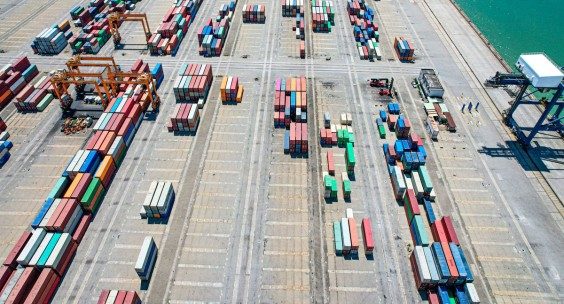
Of course, it is not only the Chinese ports that have established more protocols for Covid prevention, and each country has applied its own protocols, such as the Good Practices on Covid prevention measures and action in the port cargo handling service in Spain,14 where Aerower's central warehouses are.
These protocols lead to delays in the entry of ships into port, delays in the entry of lorry drivers, stevedores and other personnel into port, as well as major restrictions in the rotation of ships' crews. All this delays unloading and therefore slows down the whole process and the movement of vessels. There is a clear reason for these protocols: by August 2021, only 15%15 of seafarers are vaccinated.16
As if this were not enough, with everyone already out of the loop, with the production centres active and despite the prevention protocols, in August 2021 the port of Ningbo-Zhoushan (which in 2020 was the third largest port in the world by cargo volume, with 28.72 million TEU) was closed for 2 weeks due to an outbreak of covid.17 This stranded ships in port for weeks, diverting ships to other ports and creating traffic jams.
Other factors that have complicated the situation
As if it were not enough to have routes under strain from increased demand, containers in the wrong place and delays caused by Covid protocols, other problems have also played their part in this logistics saga.
The Suez Canal blockage
The blockage in the Suez Canal was also a decisive factor.18,19 This canal is a technological marvel that saves ships from sailing all the way around Africa to get from Asia to Europe. More than 10% of world maritime trade passes through it. In March 2021 the container ship Ever Given20 ran aground in the canal and blocked all maritime traffic for 6 days.21 It has been estimated that it will take months to clear the delays caused by this blockage.

Truckers and Brexit
Believe it or not, the UK's largest freight port is jammed. When container ships arrive in port and get through all the Covid protocols, they find that there is no room at the port of Felixstowe to unload any more containers. But the cause is on land: there are not enough lorry drivers to transport the goods from the port. This is not really new, but it has been made worse by the exodus of drivers from other countries because of Covid and by the restrictions on foreign workers because of Brexit.22
It is not only the UK that is short of lorry drivers. In the United States, California's ports are also experiencing jams for the same reason. The ports of Los Angeles and Long Beach handle 40% of US container traffic, and dozens of container ships currently have to remain outside these ports23 while they wait for their turn to enter and unload.24 The problem is such that President Joe Biden is considering mobilising the National Guard to ease the road transport problem.25 In addition, these ports are currently operating 24 hours a day, 7 days a week.
Rush and bad weather
As if all this were not enough, the weather has not helped at all. This winter the Pacific has been battered by the strongest winds since 1948. This, together with the rush to ship as much cargo as possible, with some containers being stowed incorrectly, has had an unexpected consequence. This year a record 1,000 containers have been lost at sea. Although this is not a high percentage in relation to annual container movements, it means financial losses for the companies, on top of all the others.26
I want to fix it, but I make it worse
In a well-meaning effort to speed up processes, shipping companies are now loading ships more heavily.27 Before the pandemic, ships arriving at Long Beach used to carry 4,000 TEU. Today they arrive with around 7,000 TEU, and the ports are not prepared to unload so much cargo.28 This is stressing port facilities and slowing port operations down even more.
Materials are disappearing and prices are rising
All these problems, some major and some minor, are causing a global shortage of raw materials29 and soaring prices. Problems have already been detected in industry30 due to shortages of microchips and semiconductors, as well as plastics, paper, cardboard,31 metals such as iron, aluminium or copper, and strategic minerals such as cobalt, lithium or indium. Again, with supply short and demand high, the prices of these materials are skyrocketing on the commodities markets.


How does this affect my order?
All of the above could be the plot of an apocalyptic movie, but it is something that is happening here and now. And, of course, unfortunately it is something that affects your order, because at Aerower we are manufacturers and everything that happens to the raw materials we use for manufacturing affects us.
The plastics from which we manufacture Jumper1 components have undergone a sharp price increase of between 20% and 50%34 and delivery times have risen from weeks to 6 months or even a year.35
The price of paper, with which we print the instructions for use and the various manuals, has risen by 30% and there has been a 45-day delay in deliveries.36 The cost of cardboard, with which we package our products, has also risen by 12% in the first few months of the year.37
Of course, all the problems and cost overruns in transport are also an issue, as we receive raw materials from different locations and distribute to countries on three continents.
Our sea, air and land transport costs have increased in the same way as other importers and exporters around the globe, as we have already seen in the article, the cost of a single container has risen from $1,000 to over $9,000.
The lack of space in transport has also affected us, with delays in deliveries of more than a month in shipments due to lack of space on ships and land transports, both in the export of our Jumper1 and spare parts and in the import of components and raw materials.
These delays with deliveries of polymers and other raw materials with the manufacturers and suppliers we work with, as well as delays and stresses in freight services, have been an opportunity cost for Aerower and all our distributors and partners.
Another destabilising factor in the market and in logistics movements, analysed in this article, has also affected us: Brexit. Spain, as a member of the EU, enjoys freedom of movement of goods with its EU partners, the exit of the United Kingdom from this club has meant an increase in incidents when moving our products across the new border. During the first months of the year, we have suffered a 700% increase in transport incidents with the UK, due to delays in the delivery of goods and bureaucratic problems at British customs.
Fortunately, Aerower's staff is made up of committed professionals and we are managing to solve all these problems little by little. We have diversified the origin of raw materials and suppliers in order to produce in less time, we work with the most reliable shipping companies in the market to avoid unwanted delays by assuming higher costs, and thus be able to meet the growing demand for jumpers, spare parts and accessories. In addition, we work with pallet and parcel brokers to achieve improvements in cost and delivery time, passing on to our customers the improvements we achieve and avoiding as much as possible that the current problems of the entire supply chain harm our customers.

References:
1 Wikipedia. Logística. Retrieved 9 November 2021 from: https://es.wikipedia.org/wiki/Logística#Principales_indicadores_(KPI)_de_la_logística
2 Andrés Sevilla Arias. Economipedia. Logística. Retrieved 9 November 2021 from: https://economipedia.com/definiciones/logistica.html
3 Directorio General de Carga Internacional (DGCI) (3 April 2017). Asia-Europa será la ruta del barco portacontenedor más grande del mundo. Retrieved 9 November 2021 from: http://www.dgcinternacional.com/noticias/339
4 Enrique Pérez (2 October 2021) Xalaka. Estamos cargando demasiado los barcos de contenedores y esto está ralentizando aún más todo. Retrieved 9 November 2021 from: https://www.xataka.com/empresas-y-economia/estamos-cargando-demasiado-barcos-contenedores-esto-esta-ralentizando-todo
5 Gómez, L., Álvarez, A. (18 June 2021). El Economista. El transporte marítimo se encarece un 328% por el Covid y el atasco en China. Retrieved 9 November 2021 from: https://www.eleconomista.es/empresas-finanzas/noticias/11280696/06/21/El-transporte-maritimo-se-encarece-un-328-por-el-Covid-y-el-atasco-en-China.html
6 Moldtrans (9 August 2021) Claves para entender la escasez de contenedores marítimos que está elevando los precios del transporte. Retrieved 9 November 2021 from: https://www.moldtrans.com/entender-la-escasez-de-contenedores-maritimos-que-esta-elevando-precios/
7 Organización Mundial del Comercio (4 October 2021) La recuperación del comercio mundial supera las expectativas, aunque con divergencias regionales. Retrieved 9 November 2021 from: https://www.wto.org/spanish/news_s/pres21_s/pr889_s.htm
8 He, L. (7 September 2021) CNN Business. China’s trade hit record levels last month despite the global shipping crisis. Retrieved 9 November 2021 from: https://edition.cnn.com/2021/09/07/economy/china-trade-august-covid-intl-hnk/index.html
9 Prieto, M. (20 August 2021) Expansión. La explosión del comercio electrónico. Retrieved 9 November 2021 from: https://www.expansion.com/economia-digital/2020/08/20/5f3d852f468aeb11628b45c3.html
10 Directorio General de Carga Internacional (DGCI) (4 November 2021) Canal de Panamá finaliza año fiscal con récord en toneladas de carga. Retrieved 9 November 2021 from: https://dgcinternacional.com/noticias/visualizar.php?id=8825&pais=§or=&clave=
11 Moreno, I. (February 2021) Efecto Covid: fletes al alza. Mar, 610, 10-13. https://www.seg-social.es/wps/wcm/connect/wss/893a6688-8471-4317-9396-c26f16c5c712/MAR610_FEBRERO_FInal.pdf?MOD=AJPERES
12 López, M. (26 August 2021) Xataka. El mundo del transporte marítimo está más loco (y caro) que nunca: De menos de 1.000 a 20.000 dólares para enviar un contenedor. Retrieved 9 November 2021 from: https://www.xataka.com/vehiculos/mundo-transporte-maritimo-esta-loco-caro-que-nunca-1-000-a-20-000-dolares-para-enviar-contenedor
13 La República (17 August 2021) Puertos chinos colapsan por política de “tolerancia cero” sobre el COVID-19. Retrieved 9 November 2021 from: https://www.larepublica.co/globoeconomia/puertos-chinos-colapsan-por-politica-de-tolerancia-cero-sobre-el-covid-19-3218196
14 Puertos del Estado. Ministerio de transportes, movilidad y agenda urbana. Gobierno de España (8 April 2020) Retrieved 9 November 2021 from: https://www.puertos.es/es-es/Documents/2020-04-08%20doc%20Gu%C3%ADa%20Practicaje%20COVID-19.pdf
15 El canal (13 August 2021) Solo el 15% de las tripulaciones está vacunada. Retrieved 9 November 2021 from: https://www.diarioelcanal.com/solo-el-15-de-las-tripulaciones-esta-vacunada/
16 Global Maritime Forum (12 August 2021) Low vaccination rate among seafarers, suggests Neptune Indicator. Retrieved 9 November 2021 from: https://www.globalmaritimeforum.org/press/low-vaccination-rate-among-seafarers-suggests-neptune-indicator
17 El Confidencial (25 August 2021). China reabre un importante puerto tras dos semanas de cierre parcial por el covid. Retrieved 9 November 2021 from: https://www.elconfidencial.com/economia/2021-08-25/china-puerto-cierre-parcial-coronavirus_3249770/
18 Wikipedia. Bloque del canal de Suez de 2021. Retrieved 9 November 2021 from: https://es.wikipedia.org/wiki/Bloqueo_del_canal_de_Suez_de_2021
19 BBC (24 March 2021) Egypt’s Suez Canal blocked by huge container ship. Retrieved 9 November 2021 from: https://www.bbc.com/news/world-middle-east-56505413
20 CBC (25 March 2021) Ship still stucks in Suez Canal as backlog grows to 150 other ships. Retrieved 9 November 2021 from: https://www.cbc.ca/news/business/suez-canal-egypt-ever-given-1.5963207
21 Yee, V., Glanz, J. (19 July 2021) The New York Times. Así fue como el Ever Given se atascó en el Canal de Suez. Retrieved 9 November 2021 from: https://www.nytimes.com/es/2021/07/19/espanol/canal-suez-evergiven.html
22 Directorio General de Carga Internacional (DGCI) (17 October 2021) $ 2 millones en importaciones en riesgo debido a retrasos en el puerto de Felixstowe. Retrieved 9 November 2021 from: https://dgcinternacional.com/noticias/visualizar.php?id=8792&pais=§or=&clave=
23 Directorio General de Carga Internacional (DGCI) (19 October 2021) Crisis de los contenedores: ¿por qué hay tantos barcos haciendo fila para entrar a Estados Unidos? Retrieved 9 November 2021 from: https://dgcinternacional.com/noticias/visualizar.php?id=8804&pais=§or=&clave=
24 Directorio General de Carga Internacional (DGCI) (21 October 2021) 334 buques con una capacidad combinada de 2,2 millones de TEUs esperan un sitio de atraque en los puertos del mundo. Retrieved 9 November 2021 from: https://dgcinternacional.com/noticias/visualizar.php?id=8815&pais=§or=&clave=
25 Serbiá, X. (22 October 2021) Biden considera desplegar la Guardia Nacional para ayudar con la cadena de suministro. Retrieved 9 November 2021 from: https://cnnespanol.cnn.com/video/biden-cadena-de-suministro-guardia-nacional-gasolina-precios-cnn-dinero/
26 Pastor, J. (28 April 2021) Xataka. Se están perdiendo más contenedores en el mar que nunca: las prisas y los atajos agravan el problema de la escasez de chips. Retrieved 9 November 2021 from: https://www.xataka.com/vehiculos/se-estan-perdiendo-contenedores-mar-que-nunca-prisas-atajos-agravan-problema-escasez-chips
27 Pérez, E. (2 October 2021) Xataka. Estamos cargando demasiado los barcos de contenedores y esto está ralentizando aún más todo. Retrieved 9 November 2021 from: https://www.xataka.com/empresas-y-economia/estamos-cargando-demasiado-barcos-contenedores-esto-esta-ralentizando-todo
28 Rivero, N. (28 September 2021) Quartz. Cargo ships are so stuffed that ports are struggling to unload them. Retrieved 9 November 2021 from: https://qz.com/2065671/cargo-ships-are-so-full-that-ports-are-struggling-to-unload-them/
29 Porteiro, C. (16 August 2021) La Voz de Galicia. El desabastecimiento de materias primas se extiende a toda Europa. Retrieved 9 November 2021 from: https://www.lavozdegalicia.es/noticia/economia/2021/08/16/desabastecimiento-materias-primas-extiende-europa/0003_202108G16P17991.htm
30 Bayona, E. (24 October 2021) Público. Por qué comienzan a escasear algunos productos básicos y cómo va a afectar a los consumidores. Retrieved 9 November 2021 from: https://www.publico.es/economia/productos-basicos-comienzan-escasear-productos-basicos-afectar-consumidores.html
31 Antena 3 Noticias (28 October 2021) La escasez de materias primas como cartón, papel y plástico hacen temer una subida de precios en infinidad de productos. Retrieved 9 November 2021 from: https://www.antena3.com/noticias/economia/escasez-materias-primas-como-carton-papel-plastico-hacen-temer-subida-precios-infinidad-productos_20211028617aa4b2c1b52e0001321789.html
32 Trincado, B. (18 September 2021) El País. ¿Por qué se dispara sin freno el precio del gas? Retrieved 9 November 2021 from: https://cincodias.elpais.com/cincodias/2021/09/17/mercados/1631893241_015742.html
33 Bermúdez, A. (15 October 2021) BBC News Mundo. Por qué se ha disparado el precio del petróleo en el mundo (y qué tiene que ver la inusual estrategia de algunos productores). Retrieved 9 November 2021 from: https://www.bbc.com/mundo/noticias-58920072
34 Mundoplast (16 March 2021). La escasez de plásticos no se solucionará hasta finales de este año. Retrieved 11 November 2021 from: https://mundoplast.com/escasez-plasticos/
35 Albalá, A. (19 June 2021). 20 minutos. El plástico roza el desabastecimiento y el mercado se resiente: "Hemos subido precios ya dos veces, nos está matando". Retrieved 11 November 2021 from: https://www.20minutos.es/noticia/4729992/0/desabastecimiento-plasticos-industria-aumento-precios-escasez/?autoref=true
36 Ginés, G. y Ramírez Cerezo, A. (26 October 2021) Abc. El desabastecimiento global dispara el precio del papel. Retrieved 11 November 2021 from: https://www.abc.es/economia/abci-desabastecimiento-global-dispara-precio-papel-202110262012_noticia.html?ref=https%3A%2F%2Fwww.abc.es%2Feconomia%2Fabci-desabastecimiento-global-dispara-precio-papel-202110262012_noticia.html
37 Ramírez, M. (17 June 2021) reforma.com Viene nueva alza del 12% al cartón. Retrieved 11 November 2021 from: https://www.reforma.com/aplicacioneslibre/preacceso/articulo/default.aspx?__rval=1&urlredirect=/viene-nueva-alza-del-12-al-carton/ar2204186